
Most people pass through Kintamani.
They stop at a viewpoint restaurant on the caldera rim, take a photograph of Mount Batur rising above the cloud, eat a plate of rice with the volcano framed behind it, and drive back down to the coast. They will say they have seen Kintamani. What they have seen is a view of it — from a distance, through glass, from behind a table.
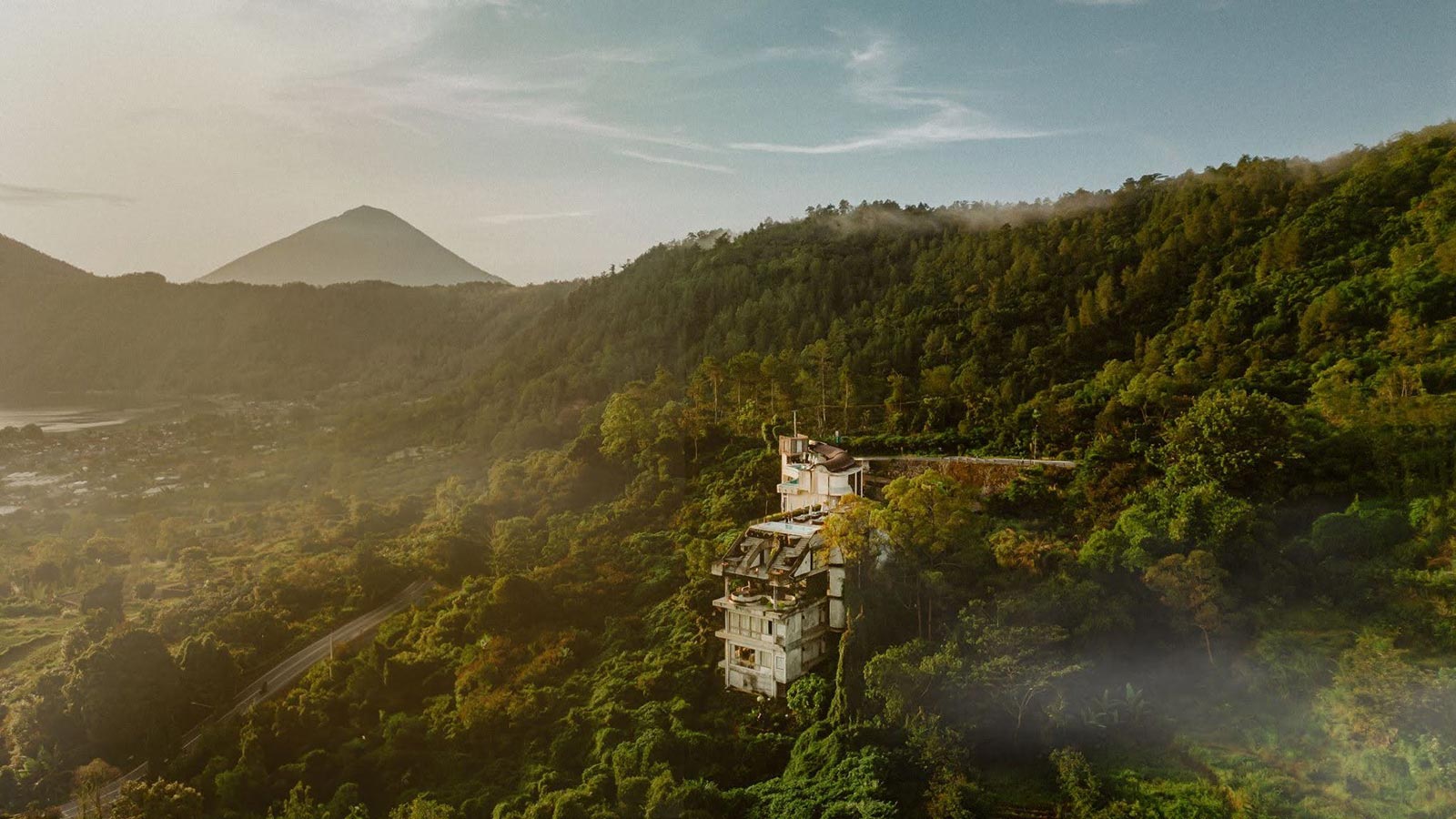
Kintamani is not a viewpoint. It is a region — 500 square kilometres of volcanic highland sitting at elevations between 900 and 1,700 metres above sea level, shaped by one of the most geologically active landscapes in Southeast Asia. The caldera you photograph from the roadside restaurant is the same landscape that produced eruptions as recently as 2000. The dark lake at the base of it is fed by geothermal springs. The mountain at the centre of it — Gunung Batur, an active stratovolcano — is among the most trekked peaks in Indonesia.
A Kintamani adventure does not begin at a viewpoint. It begins when you decide to go inside the landscape rather than look at it.
This guide is written for travelers who have made that decision, or are close to it.
The Region Most Visitors Get Wrong
There is a persistent misconception about Kintamani in Bali travel culture: that it is a day trip. Something to do between Ubud and Amed. A detour on the way north.
This framing misses the point almost entirely. Kintamani rewards time — not days packed with activity, but the kind of slower attention that allows a place to reveal itself. The quality of light here changes by the hour. The cloud behaviour around the caldera is its own kind of spectacle. The villages along the crater rim and the lake’s edge carry a pace of life that is distinctly highland Balinese — unhurried, rooted in agricultural and spiritual rhythms that have little to do with the tourist economy of the south.
The adventure experiences available in Kintamani are significant in their own right. But the context in which you have them — arriving properly, staying close, understanding where you are before you do anything — is what separates a meaningful experience from a checked box.
The Adventures That Define Kintamani
Sunrise on the Volcano — Trekking Mount Batur
The most iconic Kintamani adventure begins at 2 a.m. with a headlamp and a local guide on a dark trail of volcanic rock.
The Mount Batur sunrise trek ascends approximately 700 vertical metres from the base village of Toya Bungkah to the caldera rim — a journey of between one and a half and two and a half hours, depending on pace. The terrain is volcanic throughout: loose gravel, hardened lava, occasional steep pitches. It is physically demanding in the way that a long, steep hill is demanding — sustained rather than technical. Most moderately fit travelers complete it without particular difficulty.
What greets you at the top is harder to prepare for. The summit sits above the cloud layer at dawn. Below is the caldera — Lake Batur, the lava fields, the ring of highland villages. Above is a sky that shifts from deep indigo to amber to full morning light over the span of twenty minutes. Some guides use the natural heat vents in the volcanic rock to prepare a simple breakfast at the summit — a detail that sounds small and is, in practice, one of the most memorable parts of the day.
Practical notes for this experience: Best season — April to October for clearest skies. Fitness level — moderate. Start time — 2 to 4 a.m. depending on season. Guides are required and non-negotiable. Dress in layers; the summit is genuinely cold before sunrise regardless of the coastal heat you arrived from.
Into the Lava Fields — The Mount Batur Jeep Tour
For travelers who want the volcanic landscape without the pre-dawn climb, the jeep tour offers something the trek does not: ground-level immersion.
Open four-wheel-drive vehicles cross the hardened lava fields at the base of Mount Batur — terrain shaped by eruptions across centuries, most recently in 2000. The geological record here is written in the landscape itself: layers of solidified flow, the outlines of buried villages, the slow return of vegetation at the lava field’s edges. The Batur Global Geopark, which documents the area’s geological history across a network of official geosites, maps this record in detail — and a good driver-guide will bring it to life in a way no signpost can.
Routes typically traverse the lava fields, climb to sections of the caldera rim for elevated views, and descend to the lakeside area near Toya Bungkah. The experience runs in daylight — most tours depart mid-morning — making it accessible to families, older travelers, and anyone for whom the 3 a.m. wake-up is simply not on the table.
Practical notes for this experience: Best season — April to October, though wet season adds its own drama. Fitness level — low; the terrain is rough but you are seated. Duration — allow three to four hours minimum. Check current volcanic activity levels before departure via Magma Indonesia, the government’s official monitoring service.
On the Water — Kayaking Lake Batur
Lake Batur is the largest lake in Bali. It sits at the floor of the ancient caldera, surrounded by the volcanic rim on three sides and overlooked by Gunung Batur to the east. Wonderful Indonesia describes the lake as one of the island’s most distinctive natural features — and from the water, looking back up at the mountain and the rim, that description does not feel like an overstatement.
Kayaking on Lake Batur offers a perspective that neither the trek nor the jeep tour provides: the caldera seen from within its own floor, the mountain reflected in dark water, the scale of the ancient crater understood from its deepest point. The lake is calm in the early morning — flat, quiet, entirely unlike the surf-heavy coastline that defines most visitors’ experience of Bali’s water.
Practical notes for this experience: Best time — early morning for calm water and the best light. Suitable for most fitness levels; no prior kayaking experience is necessary for the standard lake routes. The lake’s geothermal activity means water temperatures vary by location — local guidance on where to paddle is worthwhile.
On Two Wheels — Cycling the Caldera
The highland roads around the Kintamani caldera offer some of the most scenic cycling terrain in Bali — and some of the most demanding. The routes vary considerably: gentle tracks through farming villages on the caldera rim, more challenging descents from the highland toward the lake, and the iconic downhill cycling route that carries riders from the highlands toward the coast through terraced landscape and local village life.
Cycling in Kintamani demands something different from the volcanic activities. It is slower, more intimate, more attuned to the villages and the agricultural landscape that frames the caldera. You pass coffee and vegetable farms. You move through the pace of highland Balinese daily life at a human speed. The volcano is a backdrop rather than a destination — which, for certain travelers, is precisely the right relationship to have with it.
Practical notes for this experience: Best season — dry season for road conditions; early morning for temperature and light. Fitness level — variable depending on route; guided cycling tours are available for all levels. Helmets and guidance from a local operator are strongly recommended given the road conditions on some descent routes.
Below the Surface — The Hot Springs of Toya Bungkah
Not every Kintamani adventure involves elevation or exertion. The geothermal springs at Toya Bungkah, fed by the volcanic activity of Gunung Batur, offer a different kind of experience — one that most visitors hurrying through on a day trip entirely miss.
The hot springs sit at the lake’s edge, where geothermally heated water meets the cool highland air. After a pre-dawn trek or a morning on the lava fields, the combination is quietly extraordinary: the mountain above, the steam rising from the water, the lake flat and dark in the afternoon light. It is the kind of moment that makes you understand why people return to Kintamani.
Practical notes for this experience: Available year-round. No fitness requirement. Best experienced in the afternoon or evening after an activity earlier in the day. A natural pairing with the sunrise trek or jeep tour — particularly for recovery.
How to Build a Kintamani Adventure Itinerary
The mistake most day-trippers make is trying to compress Kintamani into a single visit. The more considered approach — and the one that produces genuinely memorable experiences — is to give the region two or three days and let the activities unfold in sequence.
A well-built Kintamani adventure itinerary might look something like this:
Evening of arrival: Settle in. Watch the light change over the caldera from your accommodation. Eat a local meal. Go to bed early.
Day one, pre-dawn: The sunrise trek. Return by mid-morning. Rest, eat, absorb.
Day one, afternoon: The hot springs at Toya Bungkah. Recover in geothermal water at the lake’s edge with the mountain above you.
Day two, morning: The jeep tour across the lava fields. The caldera rim. The lakeside villages. Return by noon.
Day two, afternoon: Cycling through the caldera villages, or simply staying still — which is underrated as a Kintamani activity.
This is not a packed itinerary. It is a layered one — each experience building on the previous, the landscape becoming more familiar and more legible with each day you spend inside it.
The Stay That Anchors It All
Every version of a Kintamani adventure itinerary is improved by the same variable: where you sleep.
Travelers who base themselves in the highlands — rather than driving up from Ubud or the south each day — operate in a fundamentally different relationship with the landscape. They are already in the mountain’s world. The pre-dawn trek starts from proximity, not from a long, dark, anxious drive. The afternoon at the hot springs ends with a short return to the highlands, not a two-hour transfer back to a coastal resort.
There is also something less logistical and more qualitative about staying in Kintamani. The region has its own atmosphere — highland, volcanic, distinctly un-coastal — and that atmosphere requires time to absorb. You notice it in the quality of the air, in the temperature at dusk, in the way the cloud moves around the caldera after the afternoon heat. These are the things that make Kintamani Kintamani, and they are invisible to the day tripper.
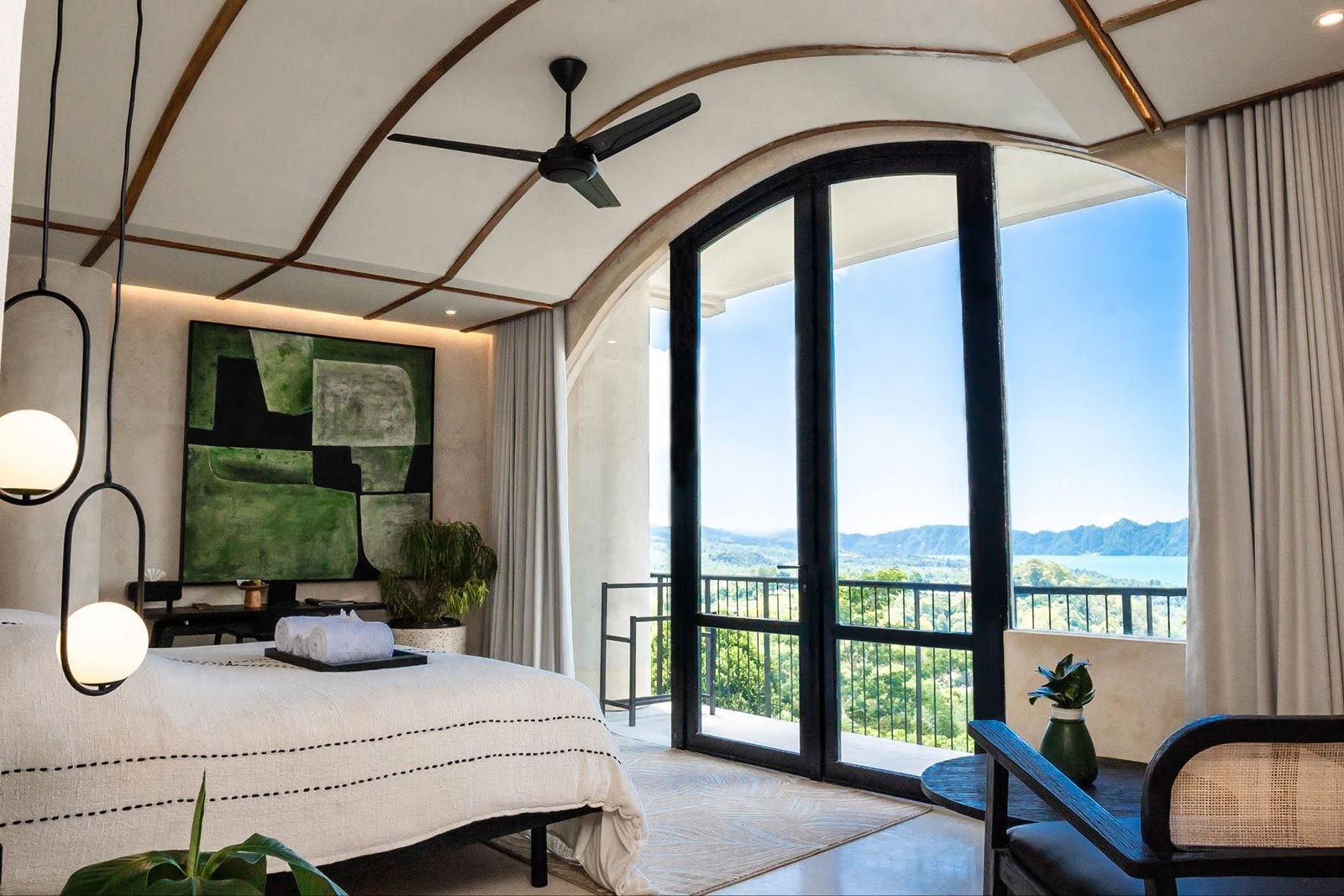
Desa Oculus sits in the Kintamani highlands with direct views over Mount Batur and the caldera landscape. It is designed around exactly the kind of stay described above — unhurried, scenic, close to the mountain, and genuinely connected to the activities that make this region worth the journey. Guests who stay here tend not to rush. The mountain is visible from the terrace. There is no urgency to arrive anywhere, because you are already there.
If the itinerary above sounds like the kind of trip you want to build, begin with where you sleep.
A Region Worth the Journey
Kintamani will not come to you. It requires the decision to go north, to gain elevation, to leave the curated comfort of the resort corridors and arrive somewhere that is still, in the best sense, working on its own terms.
The highland air is different. The landscape is different. The pace is different. And the adventures available here — on the volcano, across the lava, on the lake, through the villages — are unlike anything else Bali offers.
Most visitors see Kintamani from a distance. The ones who remember it are the ones who went inside.