
Not every traveler arrives in Kintamani wanting to hike. Some come for the landscape itself — for the vast, otherworldly terrain of hardened lava, the sheer scale of the ancient caldera, and the kind of volcanic scenery that cannot be found anywhere else on the island. A Mount Batur jeep tour offers something distinct: access to the mountain’s dramatic environment without the pre-dawn alarm and the hours of uphill trekking. It is an experience built for those who want to be inside the landscape, not above it — and it covers terrain that most visitors to Bali will never see.
This guide covers everything you need to know before you book: what the experience actually involves, who it suits, how to prepare, and why the quality of where you stay in Kintamani shapes the whole day.
What Is a Mount Batur Jeep Tour?
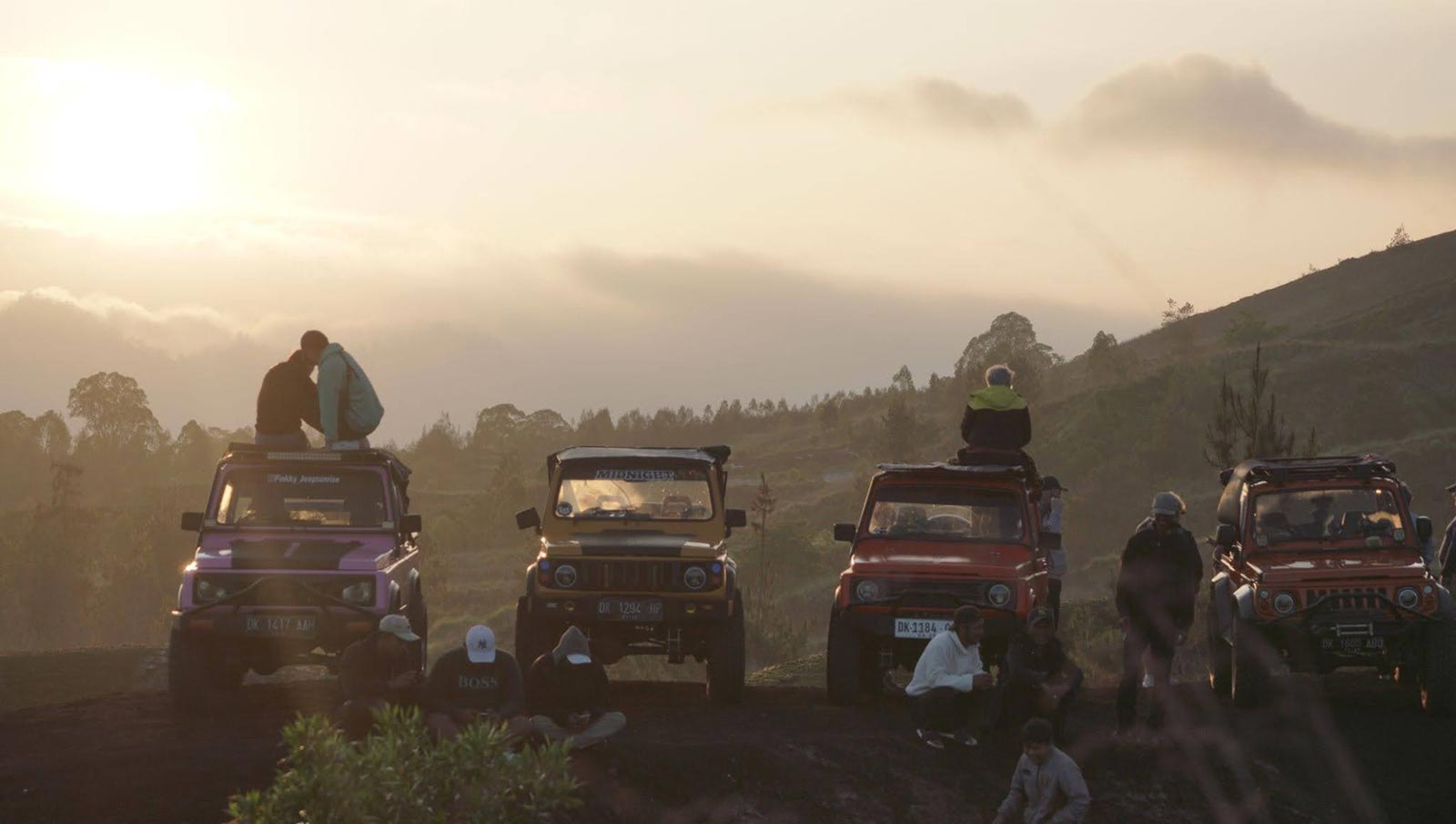
A Mount Batur jeep tour is an off-road exploration of the volcanic terrain surrounding Gunung Batur — the active stratovolcano at the heart of Kintamani’s UNESCO-designated Global Geopark. Rather than ascending the summit on foot, participants explore the mountain’s base and flanks by four-wheel-drive vehicle, traveling across the hardened lava fields, along the caldera rim, and through the highland landscape that sits at the intersection of volcanic geology and traditional Balinese village life.
The jeeps used are open or semi-open four-wheel-drive vehicles designed for rough volcanic terrain — rugged, capable, and deliberately built for the conditions. The experience is led by a local driver-guide who knows the terrain, the access points, and the stories embedded in the landscape.
It is not a theme park ride or a polished resort excursion. It is a genuine off-road journey through one of Bali’s most geologically significant environments — and that rawness is precisely what makes it memorable.
What Does the Route Cover?
Routes vary between operators, but most Mount Batur jeep tours move through three distinct environments, each with its own character.
The Lava Fields
The most visually striking section of any jeep tour around Mount Batur is the traverse of the lava fields — the solidified remnants of historical eruptions that have reshaped the lower flanks of the mountain over centuries. The most recent significant eruption occurred in 2000, and the landscape still carries that rawness: vast expanses of black and grey volcanic rock, broken and fissured, with almost nothing growing across large stretches of it.
Driving through this terrain by jeep creates a particular sensation of scale and geological time. Lonely Planet describes the area around Gunung Batur as carrying an “eerie, post-apocalyptic feel” — an observation that is more accurate than dramatic when you are actually moving through it. The lava field route also passes through areas where earlier eruptions in the 20th century buried entire villages, a history that local guides bring to life without theatrics.
The Caldera Rim
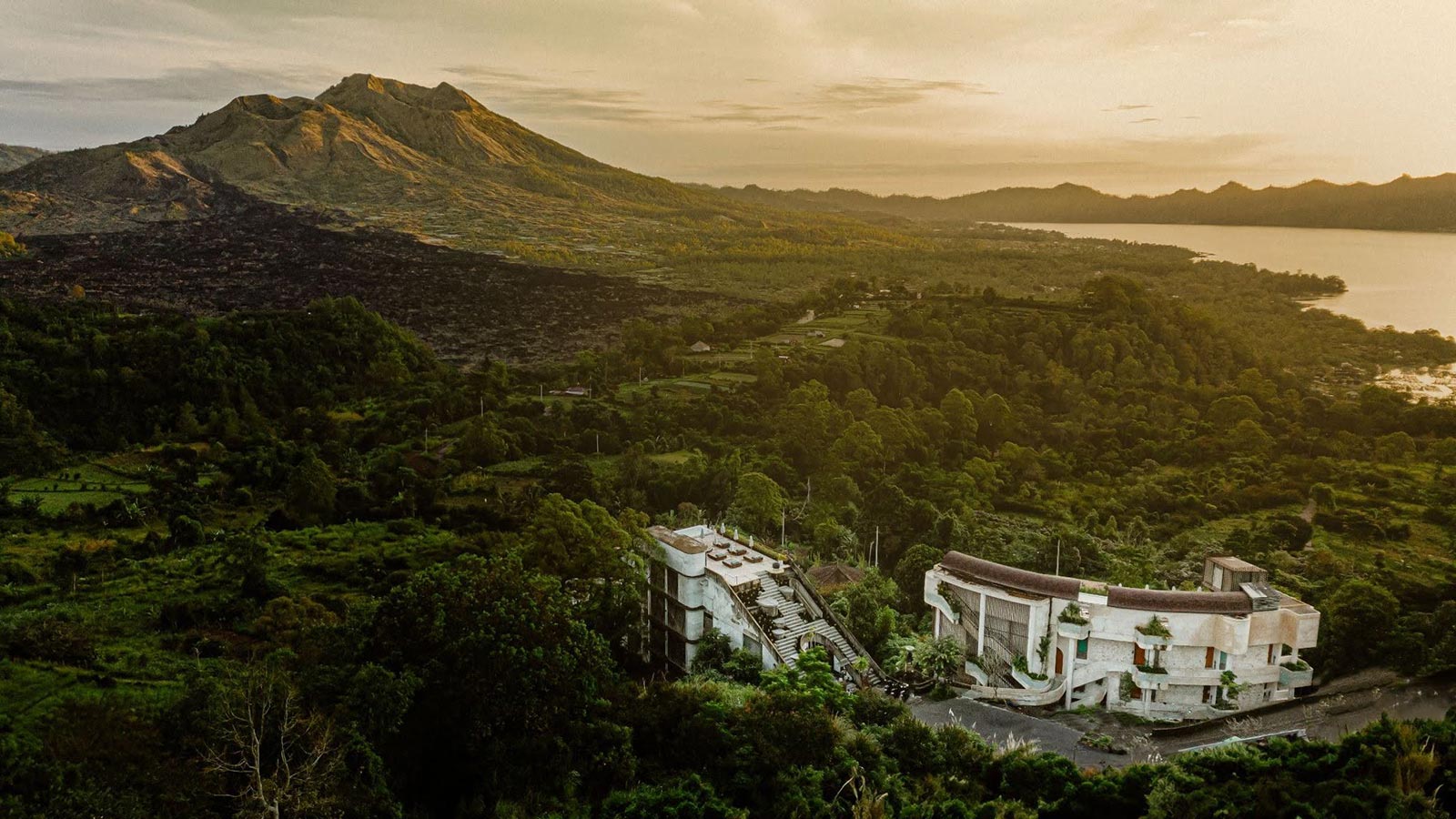
Sections of the caldera rim are accessible by jeep, offering elevated vantage points over the broader landscape — the crater below, the dark surface of Lake Batur, and the sweep of the Kintamani highlands extending toward the north coast. These are not summit views, but they are genuinely expansive and reward those who want the visual context of the volcano without the physical commitment of the full climb.
Lake Batur and the Village Below
Many jeep tour routes descend toward the caldera floor, where the village of Toya Bungkah sits on the edge of Lake Batur. This is one of the more intimate parts of the experience — the lake, the fishing boats, the village rhythms, and the hot springs fed by geothermal activity from the mountain above. Indonesia’s official tourism authority, Wonderful Indonesia, notes that Batur and its surrounding landscape represent a rare convergence of natural drama and living Balinese culture — a quality that is especially apparent at the lake’s edge, where both exist side by side in unhurried proximity.
Who Is This Experience Best For?
The Mount Batur jeep tour is, in many ways, the more inclusive of the mountain’s two signature experiences.
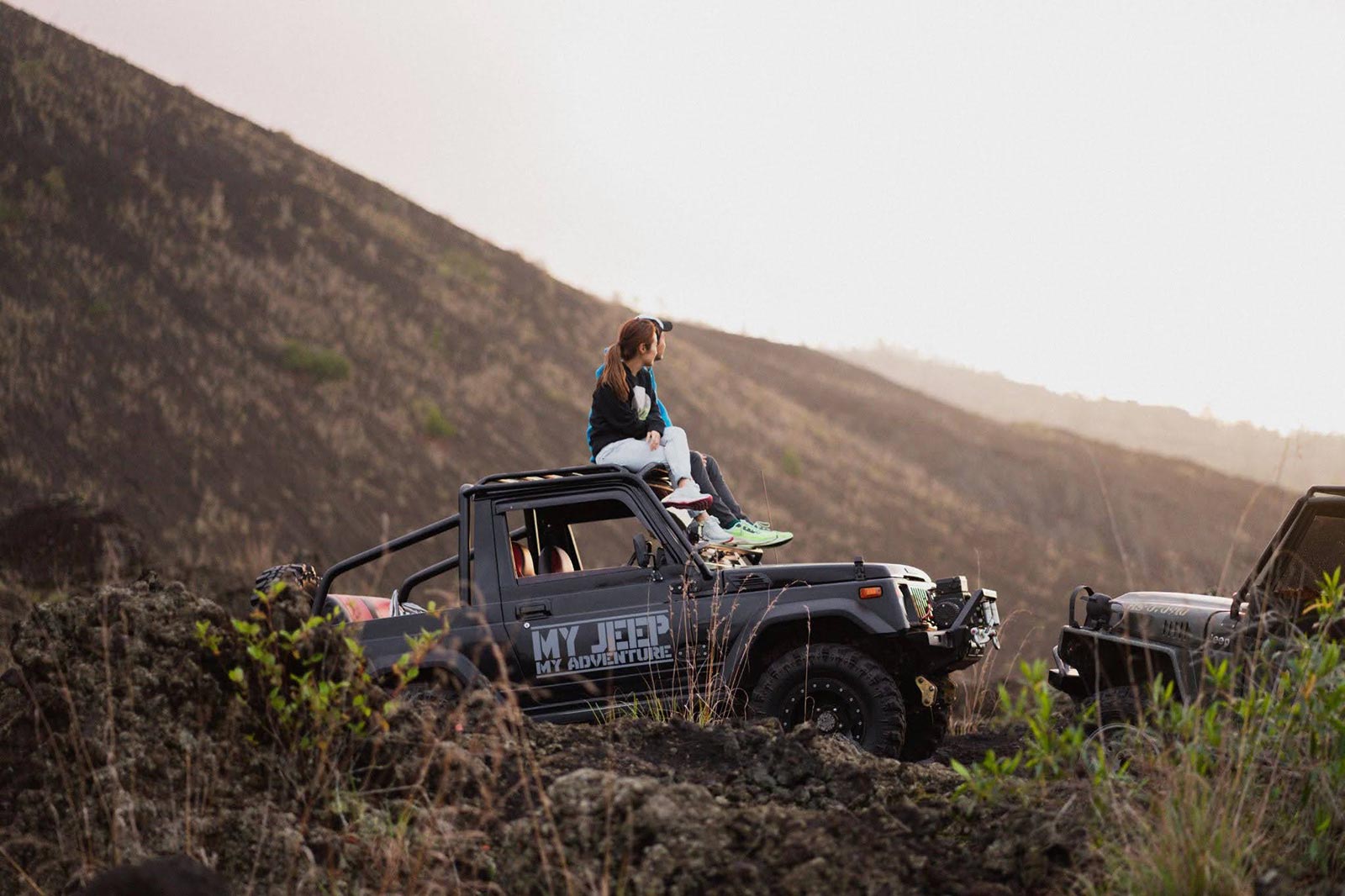
It is particularly well suited for:
- Families traveling with younger children or elderly parents who want access to the volcanic landscape without the physical demands of the trek
- Travelers with limited mobility or physical restrictions who have been told the sunrise hike is not for them
- Groups of friends or couples looking for something adventurous and scenic without the 3 a.m. wake-up call
- Photography-focused travelers who want slower, controllable access to the landscape — stopping when the light is right, rather than moving to a guide’s timed schedule
- Anyone who has already done the sunrise trek on a previous visit and wants to explore the mountain from a different perspective
- Travelers who want to understand the geology and cultural history of the caldera landscape in a more immersive, ground-level way
It is also, simply, a great deal of fun — and that is not a trivial consideration.
What to Expect on the Day
A Mount Batur jeep tour does not require the pre-dawn logistics of the sunrise trek. Most tours depart in the morning, once the light is up, making the day more accessible to a wider range of travelers and removing the anxiety of a 2 a.m. start.
The experience is fundamentally active but not physically demanding. You will be seated in the jeep for most of the journey, though some stops involve short walks across lava terrain — uneven, volcanic underfoot, and occasionally steep. Good footwear matters more than fitness.
Your driver-guide will narrate the route, explain the geological history of what you are seeing, and manage the vehicle on terrain that ranges from graded dirt tracks to raw lava field crossings. The ride itself is part of the experience — the jolts, the loose gravel, the sudden openings in the terrain that reveal the caldera below.
Many tours include a stop for refreshments or a simple meal at a local warung near the lake, where the mountain sits framed in the background and the pace of the morning slows noticeably. It is often cited by participants as an unexpectedly meaningful moment — the stillness of it, after the energy of the off-road terrain.
Before departing, it is always worth checking current volcanic activity status via Magma Indonesia, the government’s official monitoring service for Indonesia’s active volcanoes. Gunung Batur remains active, and access to certain areas of the lava field may be adjusted based on current alert levels.
When Is the Best Time to Go?
Unlike the sunrise trek, which is almost exclusively a pre-dawn activity, the jeep tour offers more flexibility in timing. That said, conditions still influence the quality of the experience.
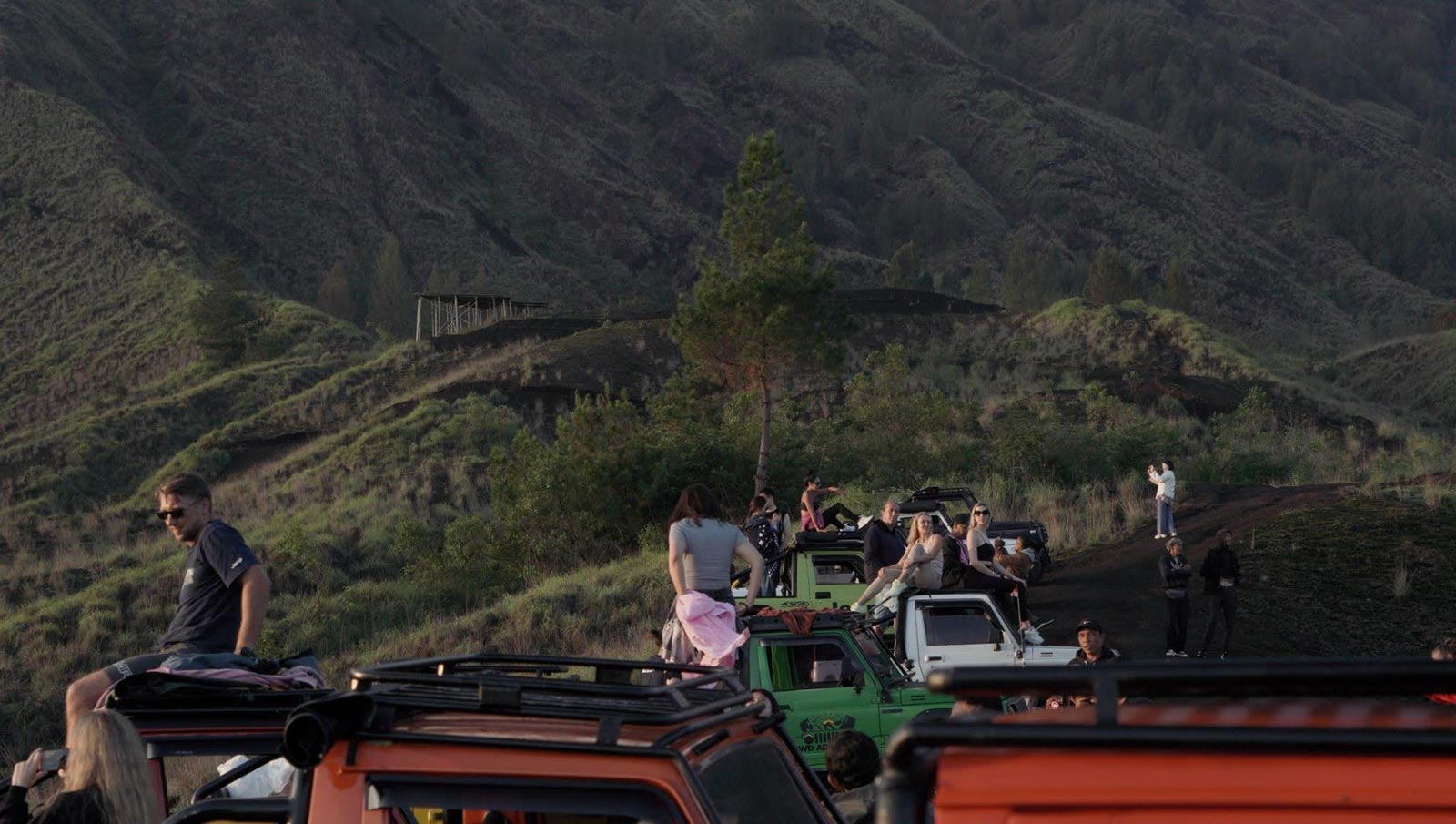
The dry season (April to October) is generally the most reliable. Clear skies mean unobstructed views across the caldera, the lava fields are drier and more navigable, and the light — particularly in the earlier part of the morning — is extraordinary for photography.
The wet season (November to March) brings the risk of rain on the open-vehicle sections of the tour and can reduce visibility at the caldera rim. However, the landscape is notably greener in these months, and the volcanic terrain takes on a different kind of drama in mist and cloud. Many experienced travelers who have seen both prefer the wet season’s atmospheric quality, even with its unpredictability.
Regardless of season, an earlier morning start is preferable to midday — not for logistical reasons, but because the light is better and the heat is more manageable.
What to Wear and What to Bring
The Kintamani highlands are noticeably cooler than coastal Bali, and the open jeep adds a wind-chill factor that surprises many first-time visitors.
What to wear:
- A light layer or long-sleeved shirt, even in the dry season
- Sturdy closed-toe shoes — the lava terrain is uneven and sharp in places; sandals are not suitable
- Sunglasses and a hat or cap for the open-vehicle sections
- Light trousers rather than shorts if you are sensitive to sun exposure on a long ride
What to bring:
- Sunscreen — the highland sun at this elevation is stronger than it feels
- A camera or fully charged phone; the lava field and caldera rim are visually extraordinary
- A light windproof layer for the higher sections of the route
- Water — stay hydrated, particularly in the dry season
- Cash for any refreshments, a local meal, or tips for your driver-guide
Why Staying in Kintamani Changes the Experience
There is a version of the Mount Batur jeep tour that begins with a long early-morning drive up from the south of Bali, and there is a version that begins with a short drive from a highland stay in Kintamani where you have already been watching the mountain for a day. These are not the same experience.
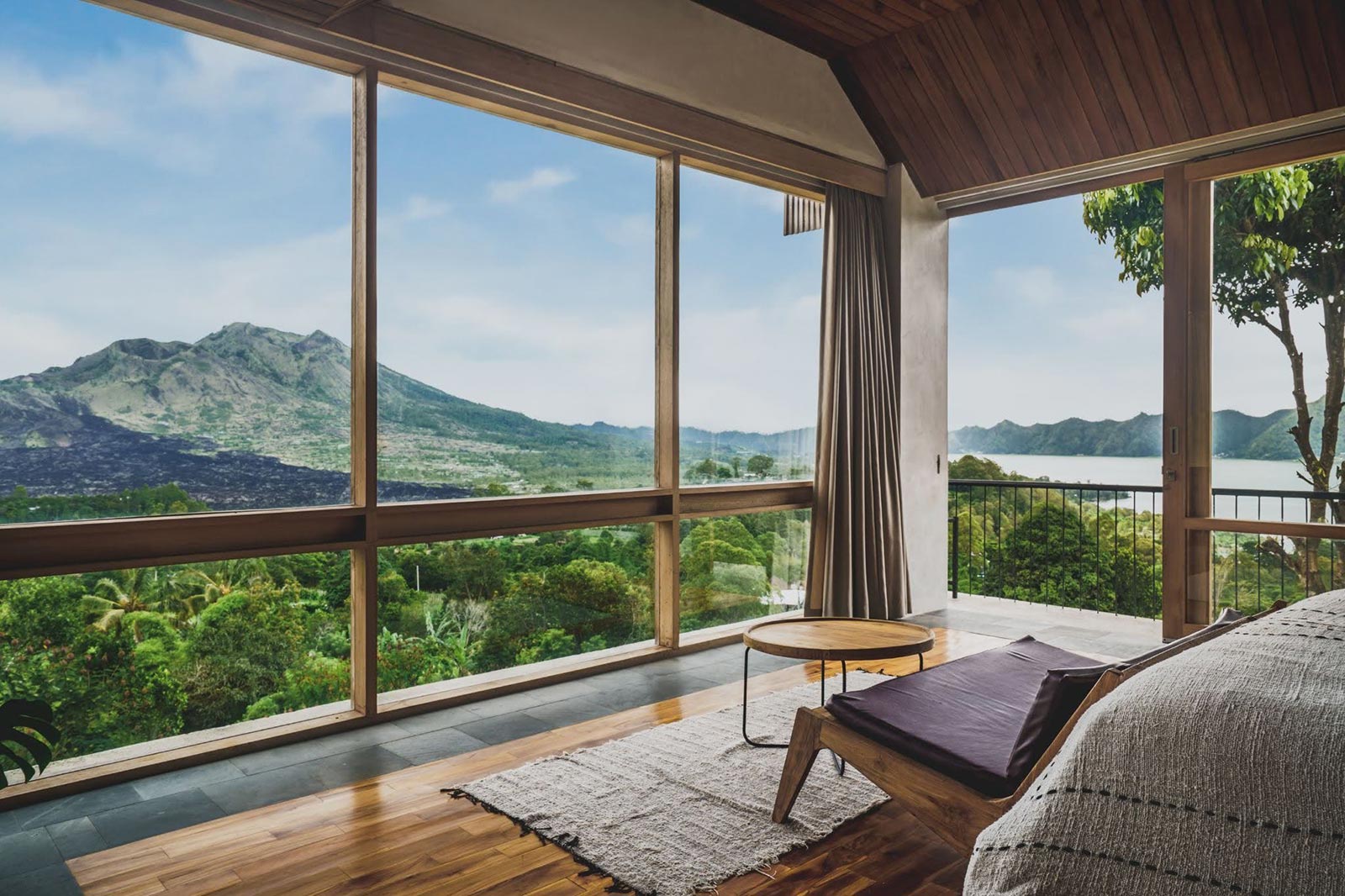
When you stay in the highlands, the jeep tour becomes part of a longer immersion in the Kintamani landscape rather than a single extracted activity. You have already watched the light change over the caldera. You have already understood something of the scale of it — the relationship between the volcano, the lake, and the villages — before you drive into it. That prior orientation changes how you see what you see.
There is also the practical reality: Kintamani-based travelers can arrange their jeep tour with less logistical effort, adjust timing based on the morning’s conditions, and return to a calm highland setting afterward rather than facing another long transfer back to the coast.
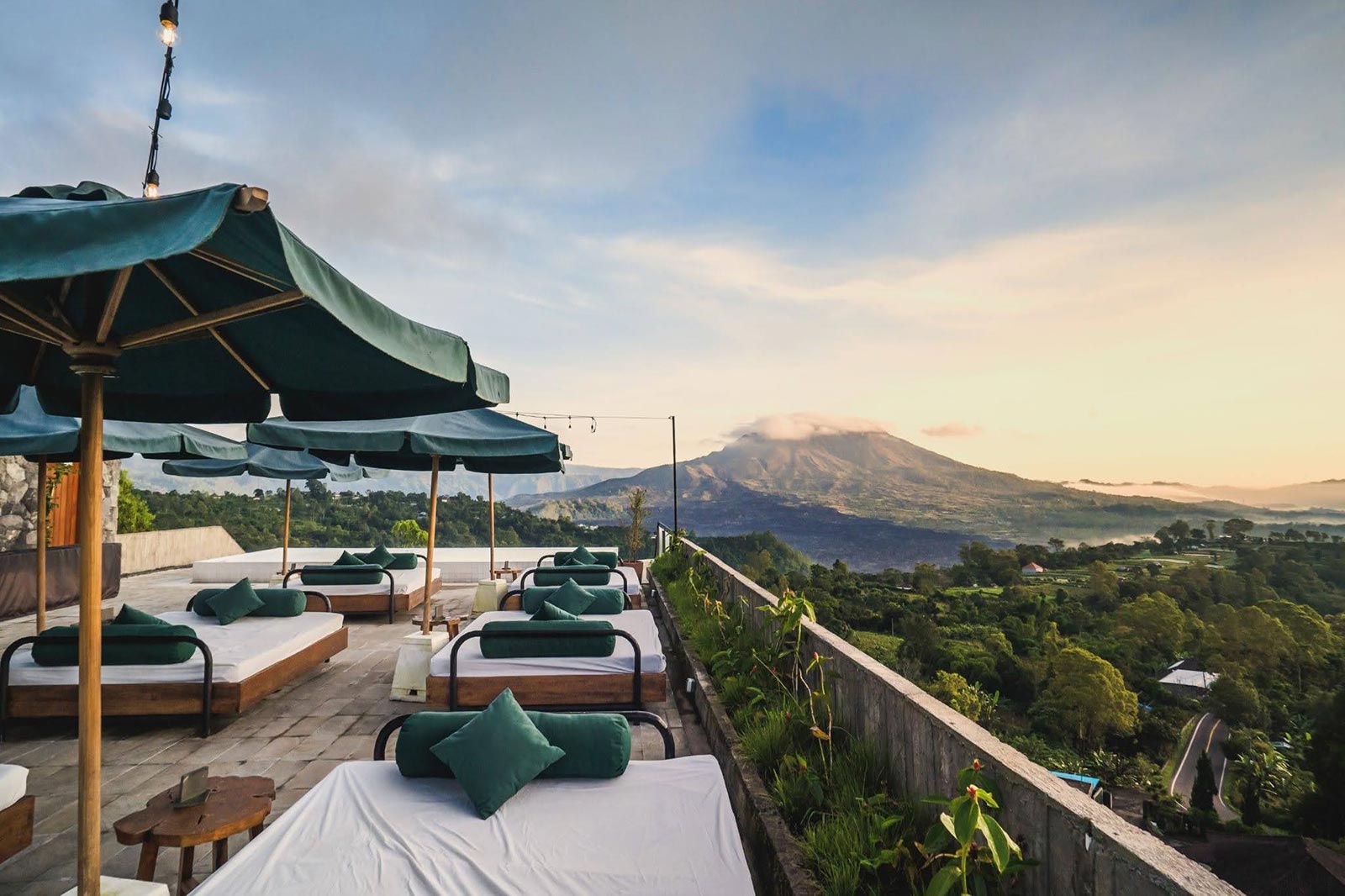
Desa Oculus, positioned in the Kintamani highlands with direct views over Mount Batur and the surrounding caldera landscape, is designed for exactly this kind of experience. Guests stay close to the mountain — close enough to watch the mist lift from the crater each morning — and can arrange activities like the jeep tour as a natural extension of the stay rather than a separate logistical undertaking. The team is well-placed to connect guests with trusted local operators who know the terrain.
After a morning on the lava fields, returning to the calm of the highlands to rest, eat, and look back at the landscape you have just traveled through is a quietly complete way to spend a day in Kintamani.
Planning Your Mount Batur Jeep Tour
A few practical considerations for those finalizing arrangements:
Choose a local, guide-led operator. The lava field terrain around Mount Batur is not always signposted, and access to certain zones shifts with volcanic activity levels. A driver-guide with real knowledge of the mountain is not just a convenience — it is what separates a genuinely informative experience from a disorienting one.
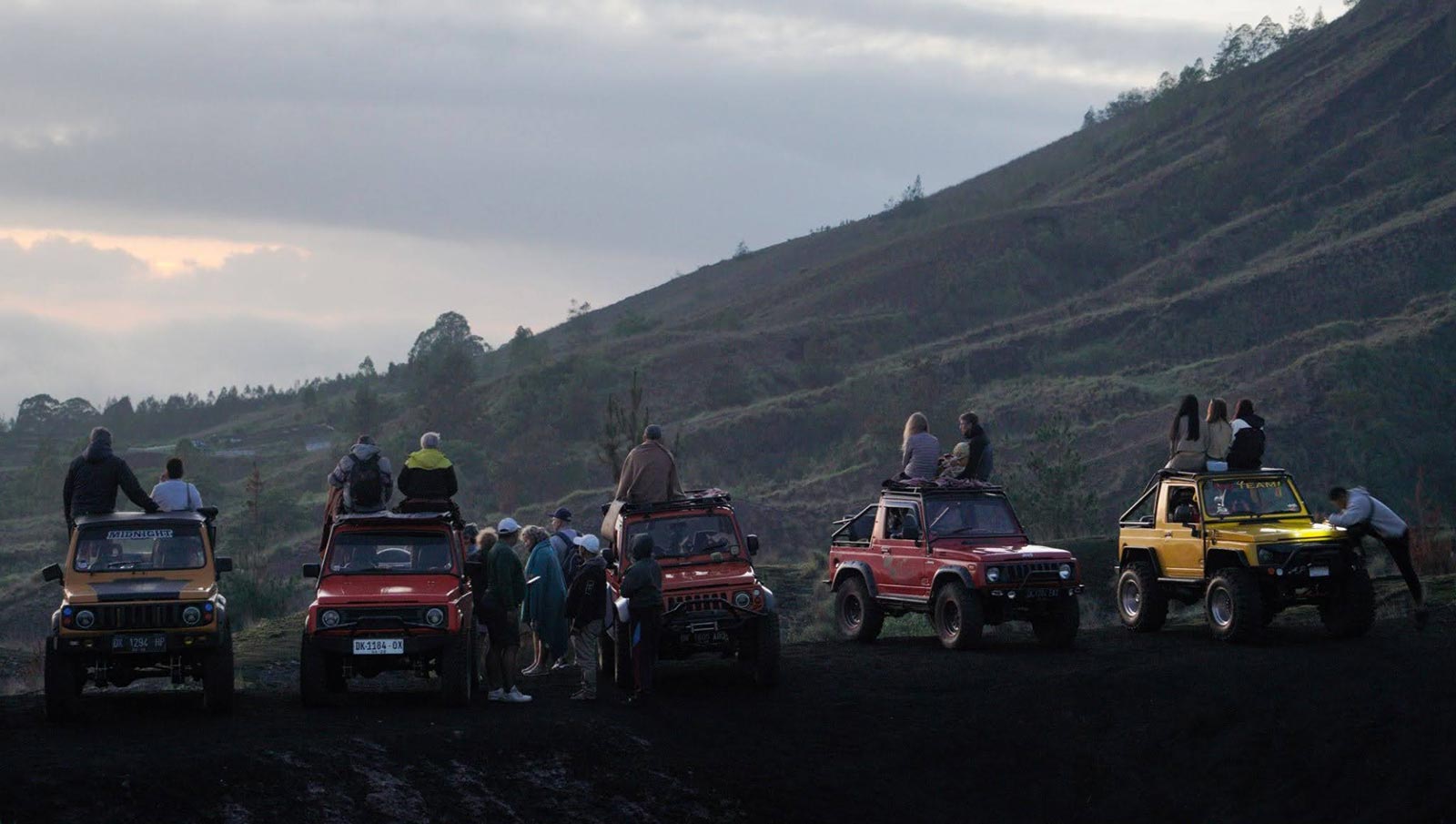
Communicate your interests in advance. Jeep tour routes are often flexible. If you are particularly interested in the lava fields, the caldera rim views, or the lakeside villages, say so when you book — a good guide will shape the route accordingly.
Allow a full morning. The best jeep tours are unhurried. Plan for at least three to four hours, including stops — more if you are traveling with a photography-focused itinerary.
Combine thoughtfully. Some travelers pair the jeep tour with the sunrise trek across separate days, using the trek to understand the mountain’s scale from above and the jeep tour to explore its terrain at ground level. It is a genuinely complementary combination.
A Final Word
The volcanic landscape of Mount Batur does not reveal itself all at once. You can stand on the summit at dawn and grasp its scale. You can drive across its lava fields and understand its texture and its history. Both are valid, and both are different.
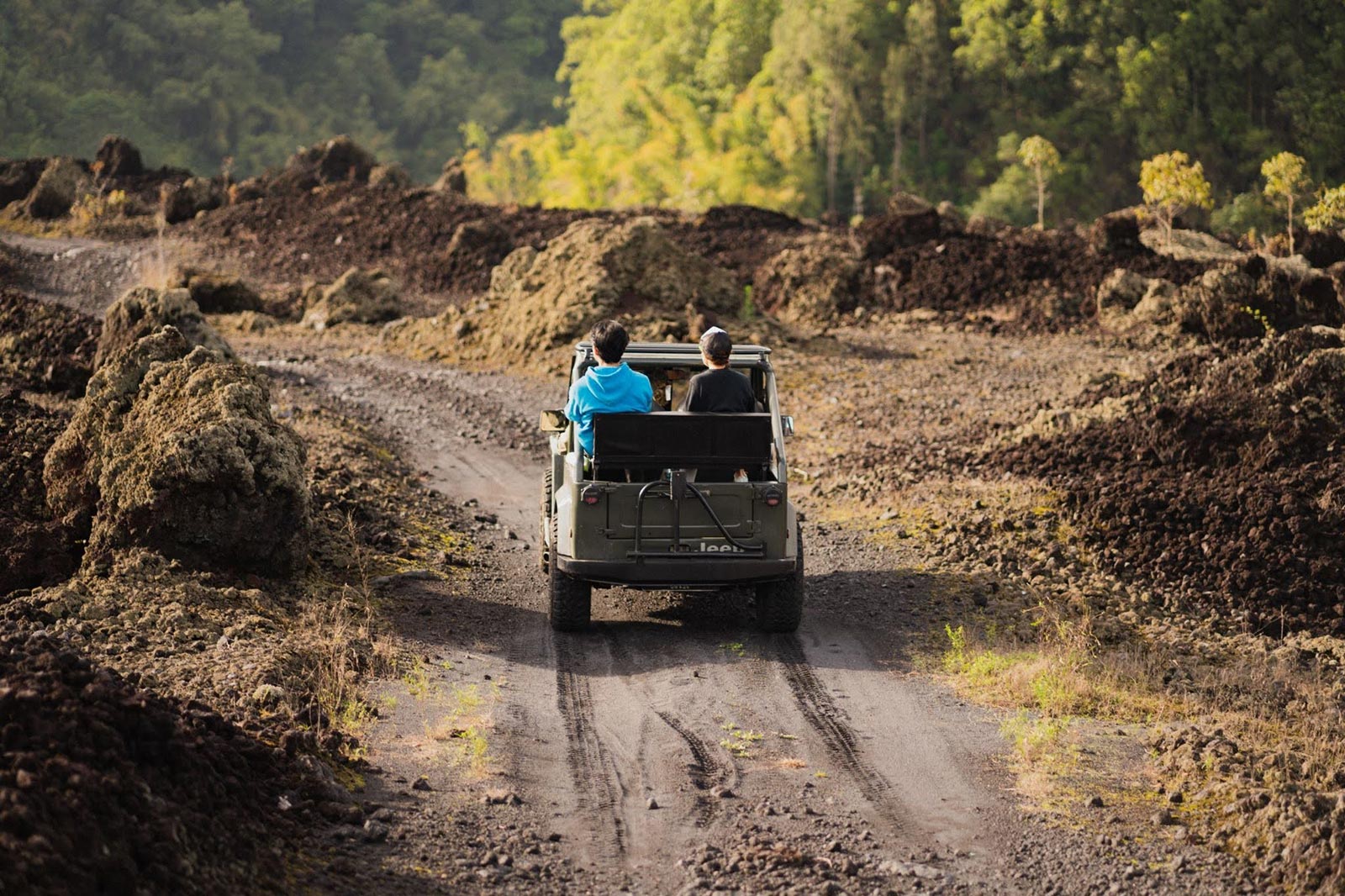
A Mount Batur jeep tour asks less of you physically than the sunrise hike, but it gives you something equally rare: time inside the landscape, at ground level, moving through geology that is still actively forming. The mountain that most visitors photograph from a distance becomes, for a few hours, something you can actually be inside.
If you are planning time in Kintamani and want to explore the volcanic terrain around Mount Batur in a way that is unhurried, immersive, and grounded in local knowledge, Desa Oculus is a thoughtful place to begin. Speak with the team about arranging your stay around the activities that matter most to you.